You were handed four boxes. straight, gay, bi, and other. And if none of them ever fit you exactly, you probably decided the problem was you. That you were confused, or a phase, or overthinking it.
You were not overthinking it. You were handed the wrong map. There aren’t four orientations. There are dozens. Because you don’t have one orientation. You have two. And yours might point in two different directions, and nobody ever told you that was allowed, let alone that it has a name.
you’ve been answering one question. it was always two
When someone asks your orientation, you think they’re asking one thing. They’re asking two, stacked so tightly you never noticed the seam.
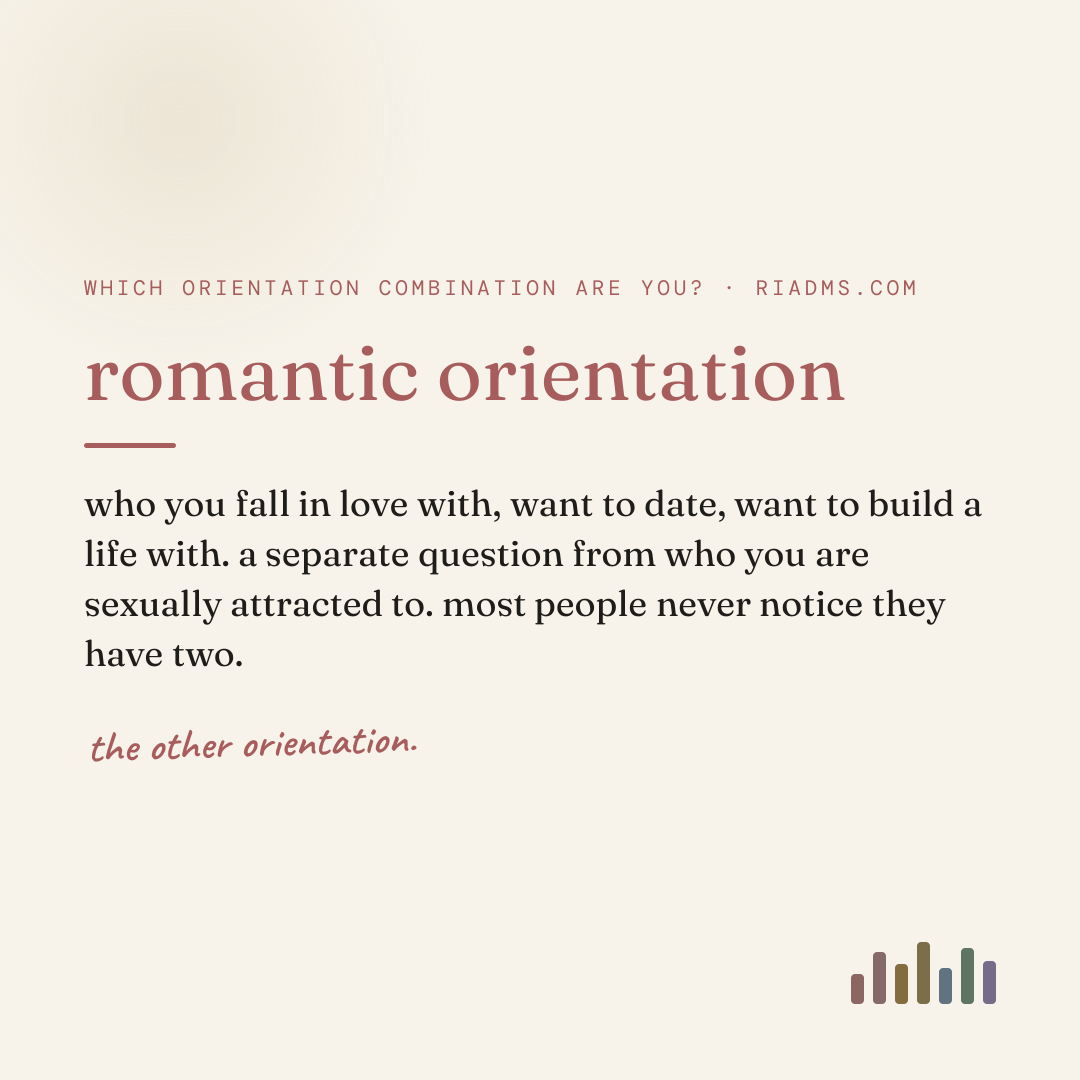
One. Who are you sexually attracted to. Who does your body want. That’s your sexual orientation. Two. Who do you fall in love with, want to date, want to build a whole life with. That’s your romantic orientation.
For most people, these two point at the exact same people, so they feel like one question and the four boxes seem like enough. But for a huge number of people the two arrows point in different directions. And when they do, none of the four boxes will ever fit, because every one of them assumes your two arrows match.
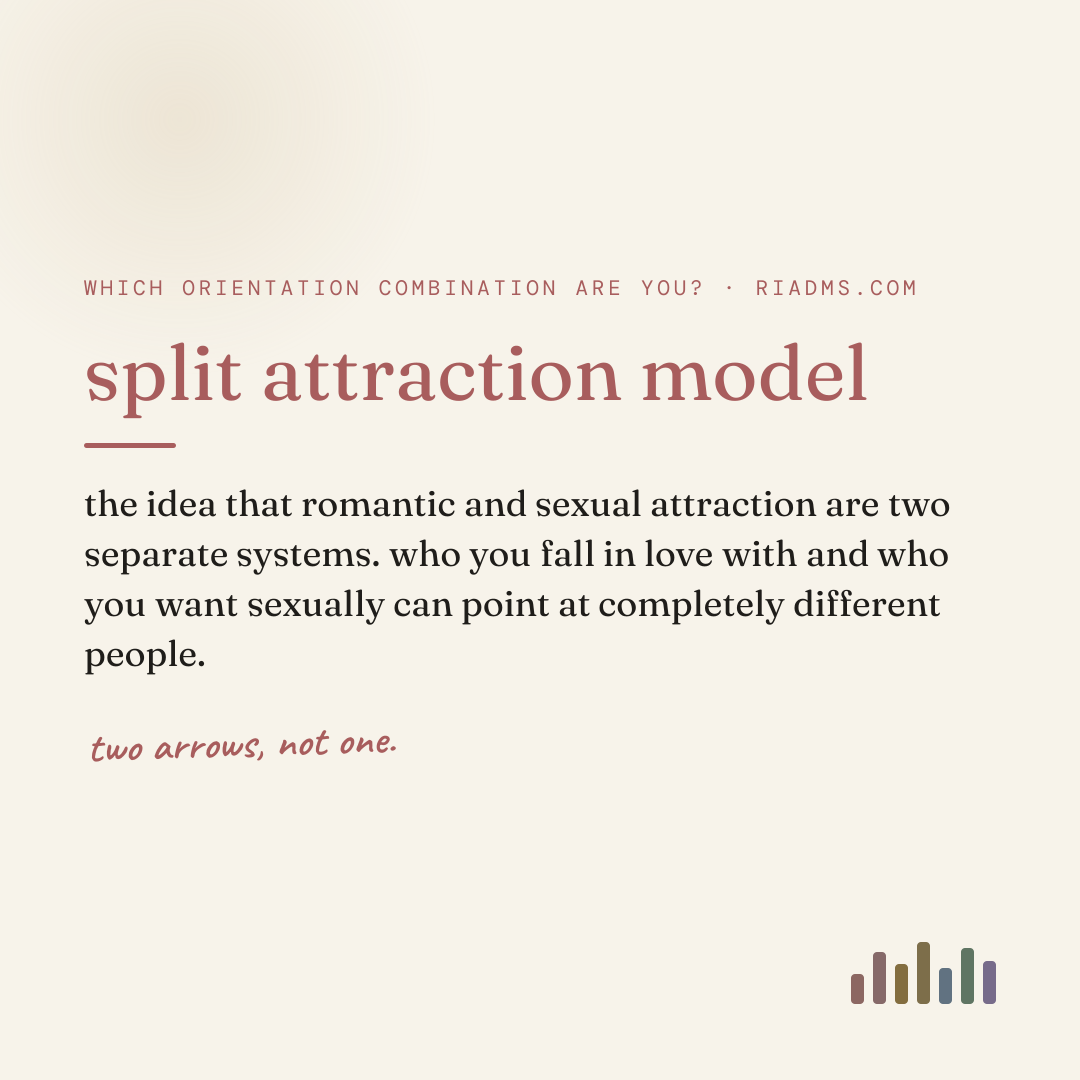
This is the split attraction model. And here’s the part I love: it didn’t come out of a lab. It came from asexual and aromantic people online, over the last twenty-odd years, who kept trying to describe their own lives and found the existing words couldn’t do it. So they built better ones. The map is homemade. That’s exactly what makes it good.
come think with me
one letter a week.
the word for one feeling you’ve had but couldn’t name, and why it works that way. the same thing you just read, in your inbox, once a week.
- one letter a week, about a ten minute read
- all nine printable workbooks, free
- the research, with its caveats kept in
- hit reply and it reaches me. i read every one
no pressure, no spam, no gatekeeping. unsubscribe anytime · riadumitrescu.substack.com
all of this is free and it stays free. if it gave you a word you didn’t have, you can buy me a coffee.
matched, and mismatched
There are two big categories here, and each one has a name, and the names are genuinely useful.
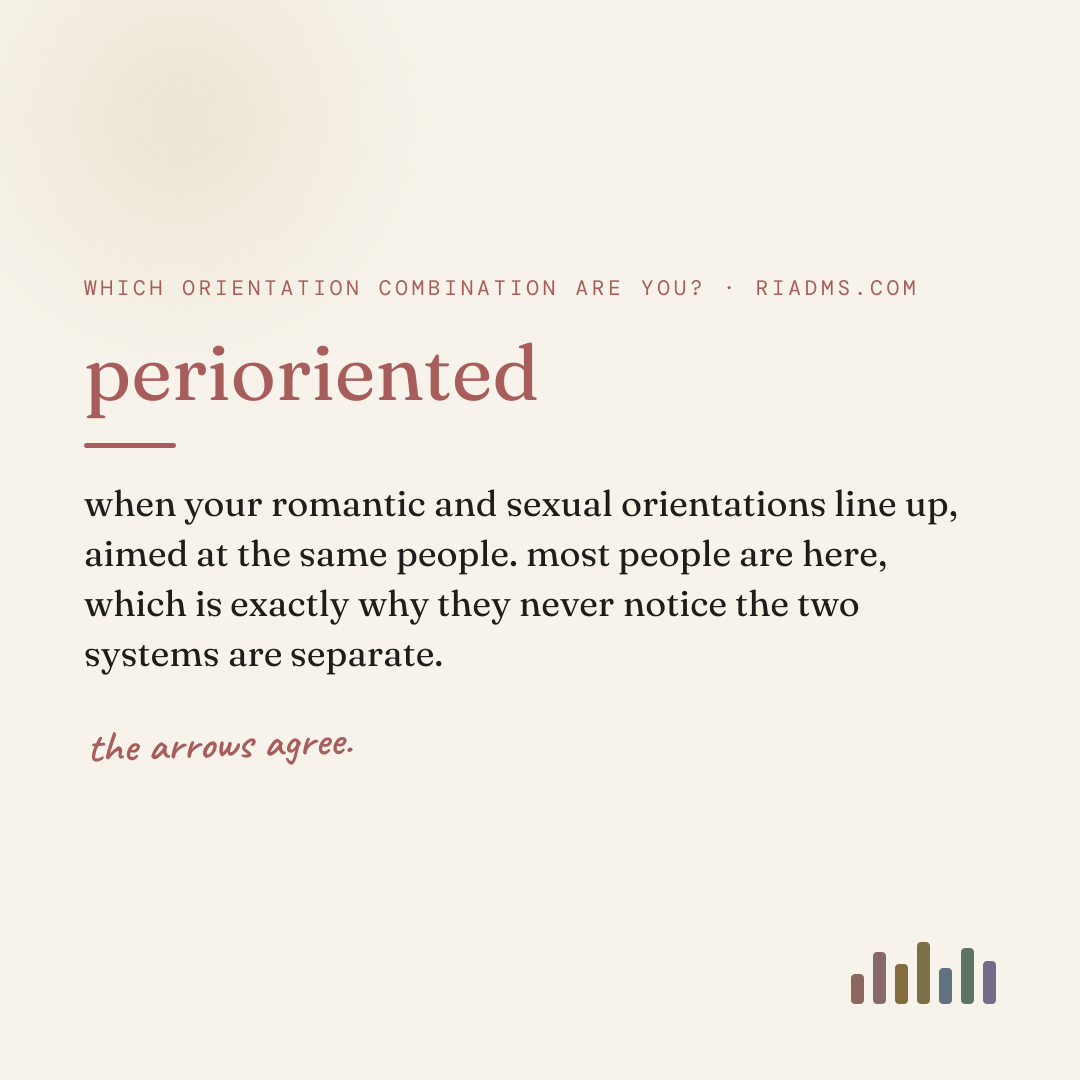
If your romantic and sexual orientations line up, aimed at the same people, you’re wordperiorientedWhen your romantic and sexual orientations line up, aimed at the same people. Most people are perioriented, which is why they rarely notice the two are separate systems.what does perioriented mean? →. A straight person who’s both sexually and romantically into a different gender. A gay person, both, same gender. The arrows agree. Most people are here.
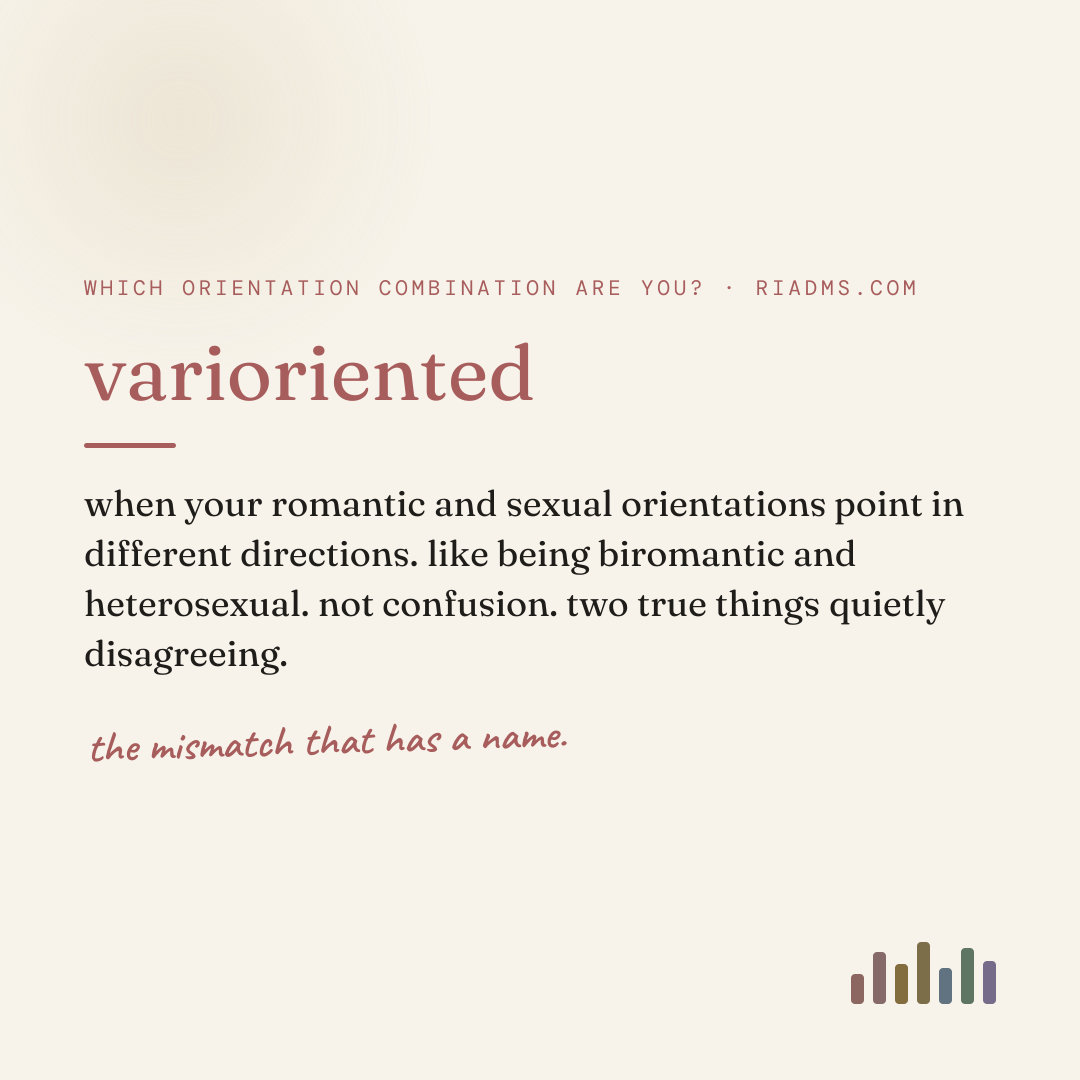
If your romantic and sexual orientations don’t line up, you’re wordvarioriented · cross-orientedWhen your romantic and sexual orientations point in different directions, like being biromantic and heterosexual. Community term from the split attraction model.what does varioriented mean? →Split attraction model ↗. And this is the whole hidden continent. This is where the words finally arrive for people who spent years thinking they were broken.
the combinations, out loud
Abstract is useless here, so let me make it real. You write the romantic orientation first, then the sexual one.
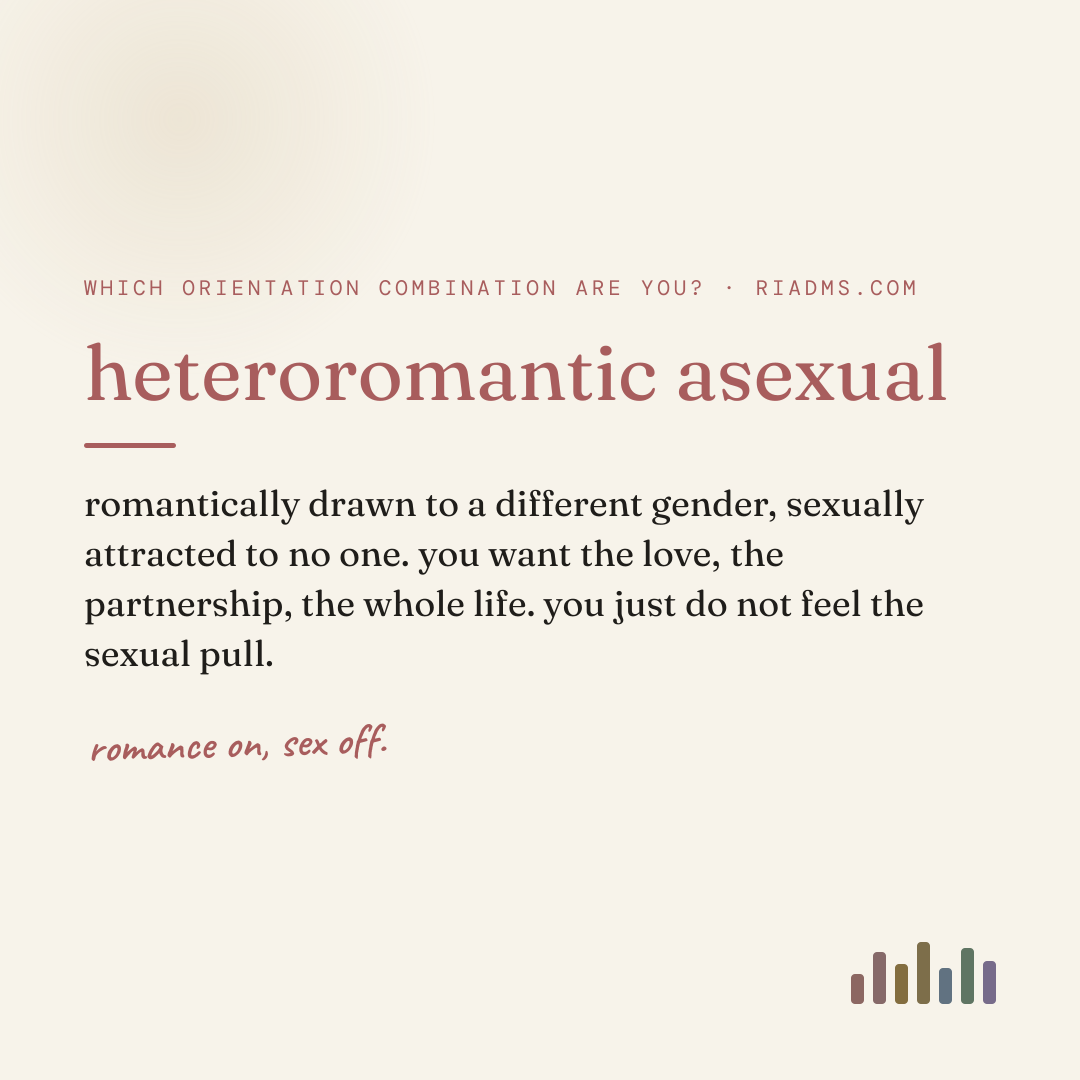
Heteroromantic asexual. That’s me. I fall in love with a different gender. I want the romance, the partnership, all of it. I just don’t experience sexual attraction to anyone. Romance arrow, on. Sexual arrow, off.
Biromantic heterosexual. Sexually attracted to one gender, but you could fall in love with more than one. Your body has a type. Your heart is more open than your body is.
Bisexual, but heteroromantic. The reverse, and I hear it constantly. You’re sexually attracted to more than one gender, but you can only actually picture building a life with one. So dating the other feels off even though the attraction is real. That’s not confusion. That’s your two arrows disagreeing, and both of them are telling the truth.
Panromantic asexual. No sexual attraction to anyone, but you could fall in love with a person of any gender. Aromantic, but allosexual. You feel sexual attraction but little or no romantic attraction, and you spend your life being told that’s impossible. It isn’t. And on the softer, in-between end there’s worddemisexualExperiencing sexual attraction only after a strong emotional bond has formed. One point on the asexual spectrum.what does demisexual mean? → and wordgray-asexual · gray-aSitting in the grey area of the asexual spectrum: sexual attraction that’s rare, faint, or only under specific conditions.what does gray-asexual mean? →, where the attraction is real but rare, or only arrives after a deep bond.
If any of those made your stomach drop a little, that was the click. That was the word arriving.
this is in your life too, “straight” person
Stay, even if you’re sure none of this is about you. Because the split is in your life. You’ve just never labeled it.
Have you ever found someone genuinely hot, the kind you notice across a room, and known instantly you’d never actually want to date them? That’s your sexual arrow firing while your romantic arrow stays quiet. Have you ever fallen for someone slowly, someone you weren’t attracted to at all until you knew them? That’s your romantic arrow leading and the sexual one following it in. Have you ever had a friendship so intense it confused you, a love that didn’t fit “friend” but wasn’t about sex? You felt a romantic pull without a sexual one, and nobody gave you the word, so you called it a weird friendship and moved on.
The model isn’t for ace people. It’s for everyone. Ace people just noticed it first, because we’re the ones it couldn’t stay hidden from.
people have been trying to say this for 150 years
This is not a trend, and that matters, because “you people just invented this online” is the usual dismissal.
Back in the 1800s, Karl Heinrich Ulrichs was already trying to describe attraction that didn’t fit the one available category, decades before any of this language existed. The feeling was always there. The vocabulary is what was missing.
And when researchers finally studied it directly, they found exactly what the community had been saying. In a 2025 study, the sociologist Canton Winer interviewed dozens of asexual people about how they experience attraction, and the finding was, in effect, yes: people genuinely live with their romantic and sexual attraction split apart, and the language they built describes something real. The research caught up to the map.
I found my own words in my late teens. Before that I thought I was just someone who kept ending relationships for no reason, who felt broken every time things escalated. Then I learned that romantic and sexual attraction were two systems, and that mine simply run separately, and it reorganized my whole understanding of myself. Not because a label boxed me in. Because it finally described what was already there.
keep pulling the thread
If you want to actually sit inside this, The Invisible Orientation by Julie Sondra Decker is the clearest introduction to the vocabulary, and Angela Chen’s Ace is the best book on why the split matters for everyone, not just ace people. And the next chapter, on sexual attraction vs sexual desire, pulls apart the other pair of things nobody separates.
Ask yourself the two questions separately, and don’t let them blur. Who does your body pull toward. Who does your heart want to build something with. The gap between your answers, if there is one, is the thing you never had a name for.
And if none of the tidy combinations fit perfectly, if you’re in the grey, if it shifts, if it’s just yours, then use the words that help and drop the ones that don’t. The map is a tool. It is not a cage. If none of these fit, great, make your own, or use nothing at all.
You were never confused. You were just working with a map that had four countries on it, when the real world has a whole atlas.


