There’s a question people ask me like they’re confessing something. They lower their voice for it, even in text. Am I actually asexual, or am I autistic and that’s why. Is it even real if there’s a reason for it.
I want to take this one slowly, because it’s almost always asked from fear. The fear that if there’s an explanation for how you feel, then how you feel doesn’t count. That one identity cancels the other one out. It doesn’t. You can be asexual. You can be autistic. You can be both. And none of those makes the others less true.
first, the overlap is real. I won’t pretend it isn’t
Let’s name it out loud, because whispering about it is what makes it scary.
Autistic people identify as asexual at much higher rates than non-autistic people. This isn’t a stereotype someone invented to be dismissive. It shows up across real studies. In one of the largest, from Cambridge, autistic adults were around eight times more likely to identify as asexual or outside the usual categories. An earlier study found that about 70% of its autistic group identified as something other than heterosexual, compared to about 30% of the non-autistic group.
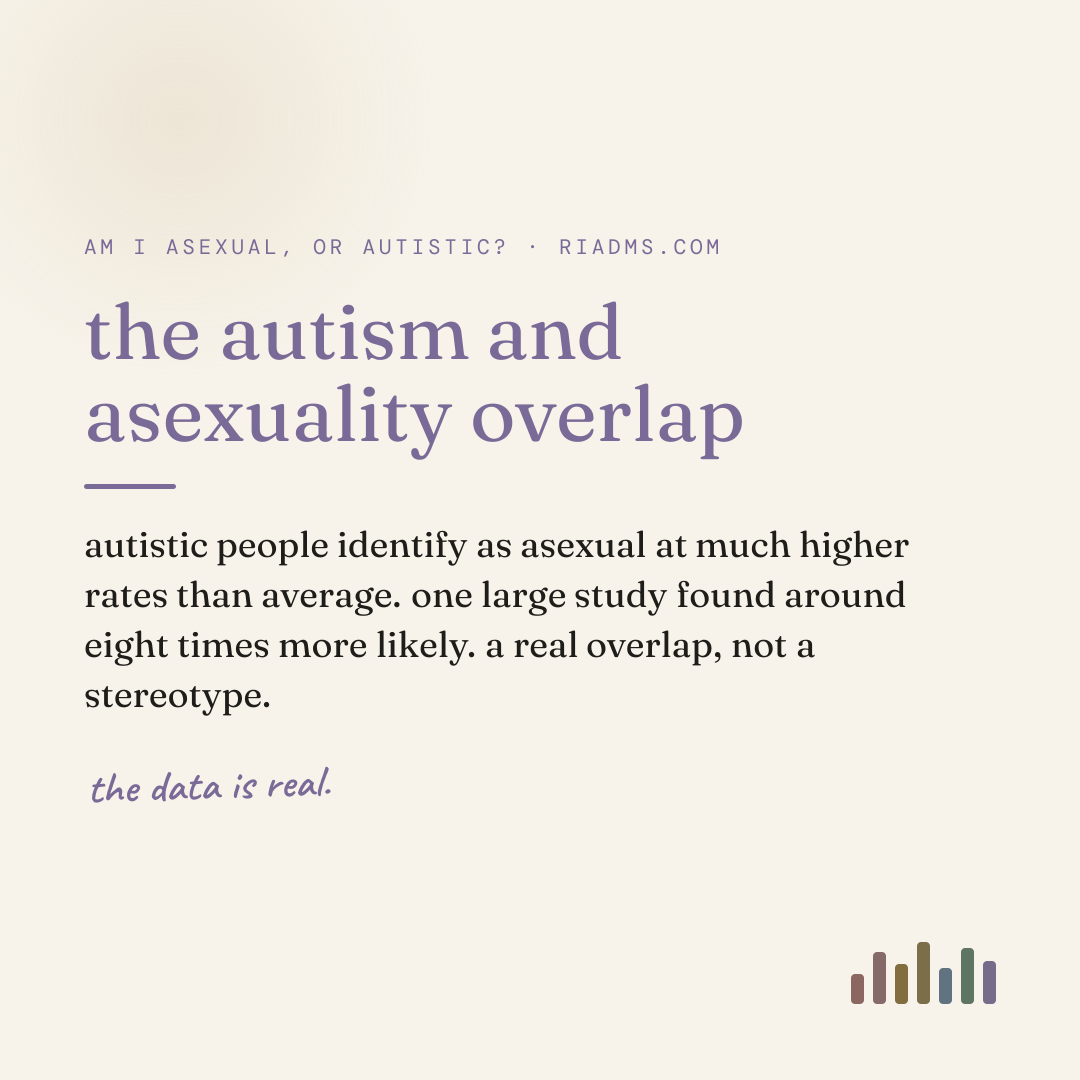
So if you’re autistic and wondering whether you’re also ace, you’re not imagining a connection. There genuinely is one in the data. I’d rather tell you that plainly than have you find it somewhere colder.
come think with me
one letter a week.
the word for one feeling you’ve had but couldn’t name, and why it works that way. the same thing you just read, in your inbox, once a week.
- one letter a week, about a ten minute read
- all nine printable workbooks, free
- the research, with its caveats kept in
- hit reply and it reaches me. i read every one
no pressure, no spam, no gatekeeping. unsubscribe anytime · riadumitrescu.substack.com
all of this is free and it stays free. if it gave you a word you didn’t have, you can buy me a coffee.
but “connected” does not mean “caused by”
This is where almost everyone, including a lot of professionals, gets it wrong. And it’s the most important part.
A connection in the data is not the same as one thing causing the other. The researchers are careful about this, and so am I. None of these studies say autism makes you asexual. They say the two show up together more often than chance. That’s a completely different claim.
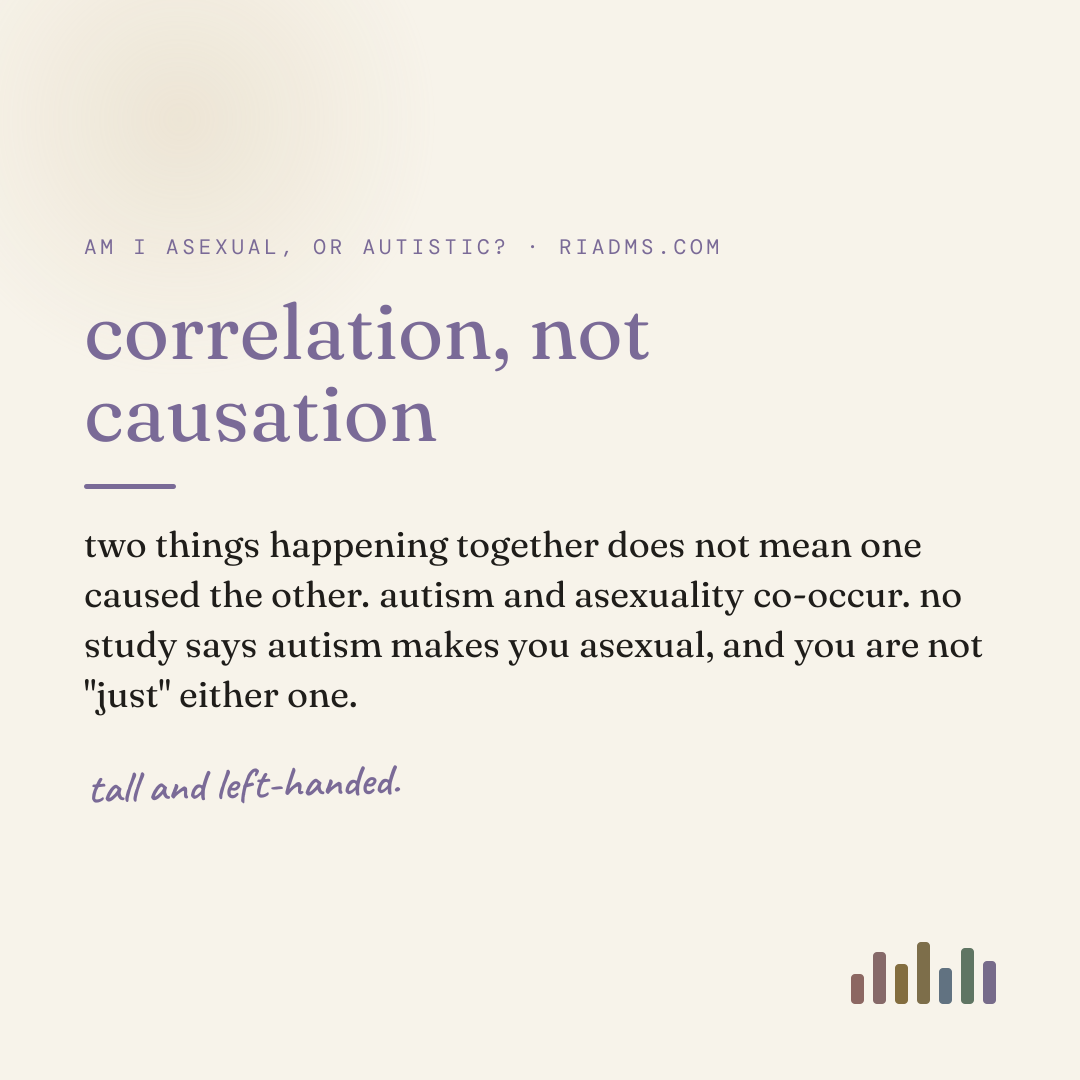
Two things can be true about a person at once without either explaining the other away. You can be tall and left-handed. Being tall didn’t cause the left-handedness. They just both live in the same body. Autism and asexuality can co-occur exactly like that: two real, separate things about you, sharing an address.
the honest question isn’t “which one.” it’s “what am I feeling”
There is a real and useful question hiding under the scary one. It’s just not “which label is the true me.” It’s “what am I actually experiencing, specifically.”
Because here’s a genuine nuance. One study, Beyond the Label by Ronis and Brotto and their colleagues, looked closely at autistic people who identify as asexual, and found that for some of them the asexual identity was tied less to a pure absence of sexual attraction and more to other things. To desire, to social energy, to how much bandwidth interpersonal stuff takes.
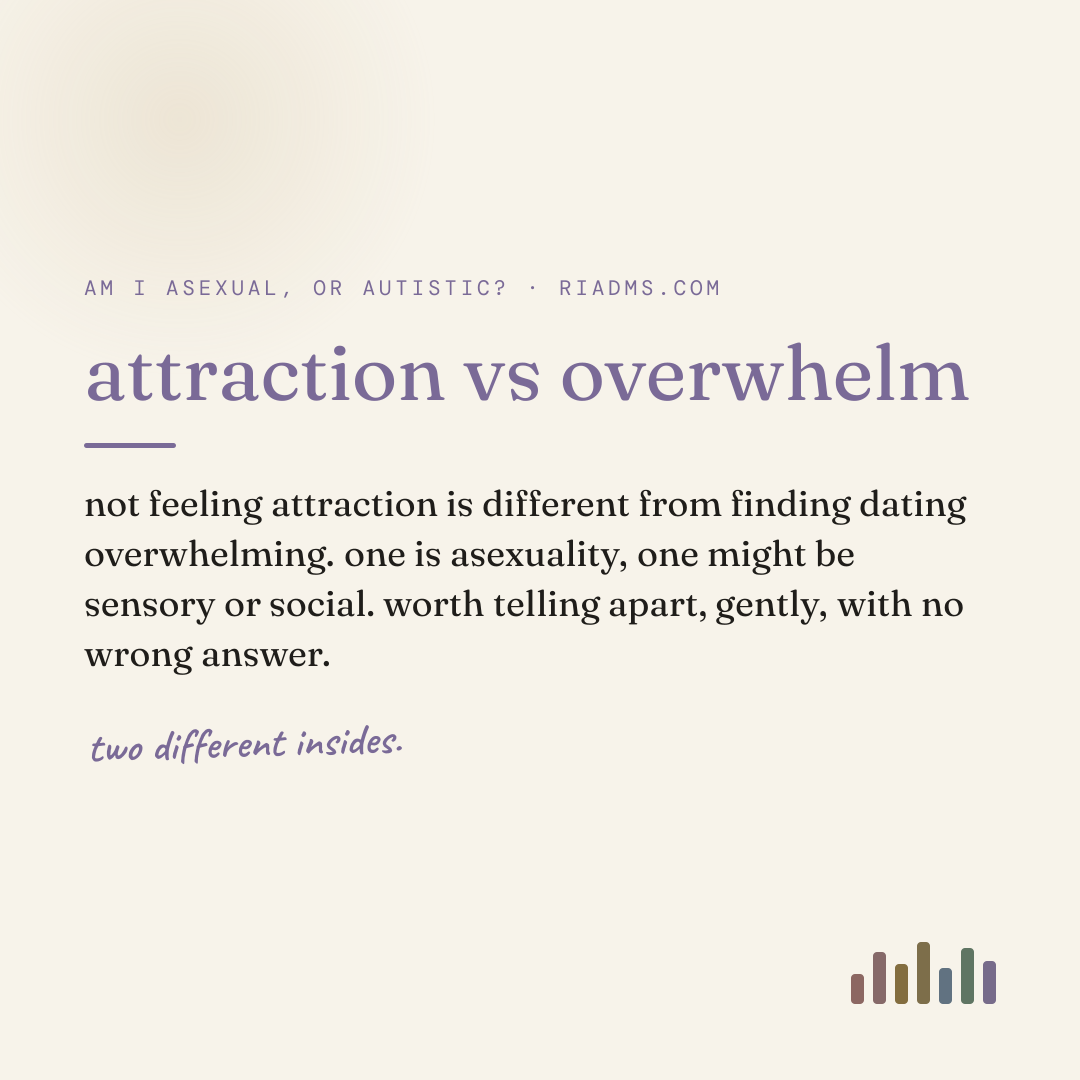
That’s worth untangling for yourself, gently, and it leans on the same split as the attraction vs desire chapter. Do I not feel sexual attraction, the pull toward a person. Or do I feel it, but the whole social and sensory world of dating is so overwhelming that I’ve opted out. Those can look identical from the outside and be completely different on the inside. There’s no wrong answer. You might land on asexual, full stop. You might land on, I do feel attraction but the machinery of dating exhausts me. You might land on both. The point of asking isn’t to disqualify yourself. It’s to know yourself. Those are opposite projects.
why the fear, though
The question comes wrapped in dread, and the fear itself is the thing worth fixing.
We’ve been taught, quietly, that an identity only counts if it has no explanation. That if anyone can point at a reason, the identity gets downgraded to a symptom. Oh, you’re not really ace, you’re just autistic. As if the moment there’s a why, the what stops being real.
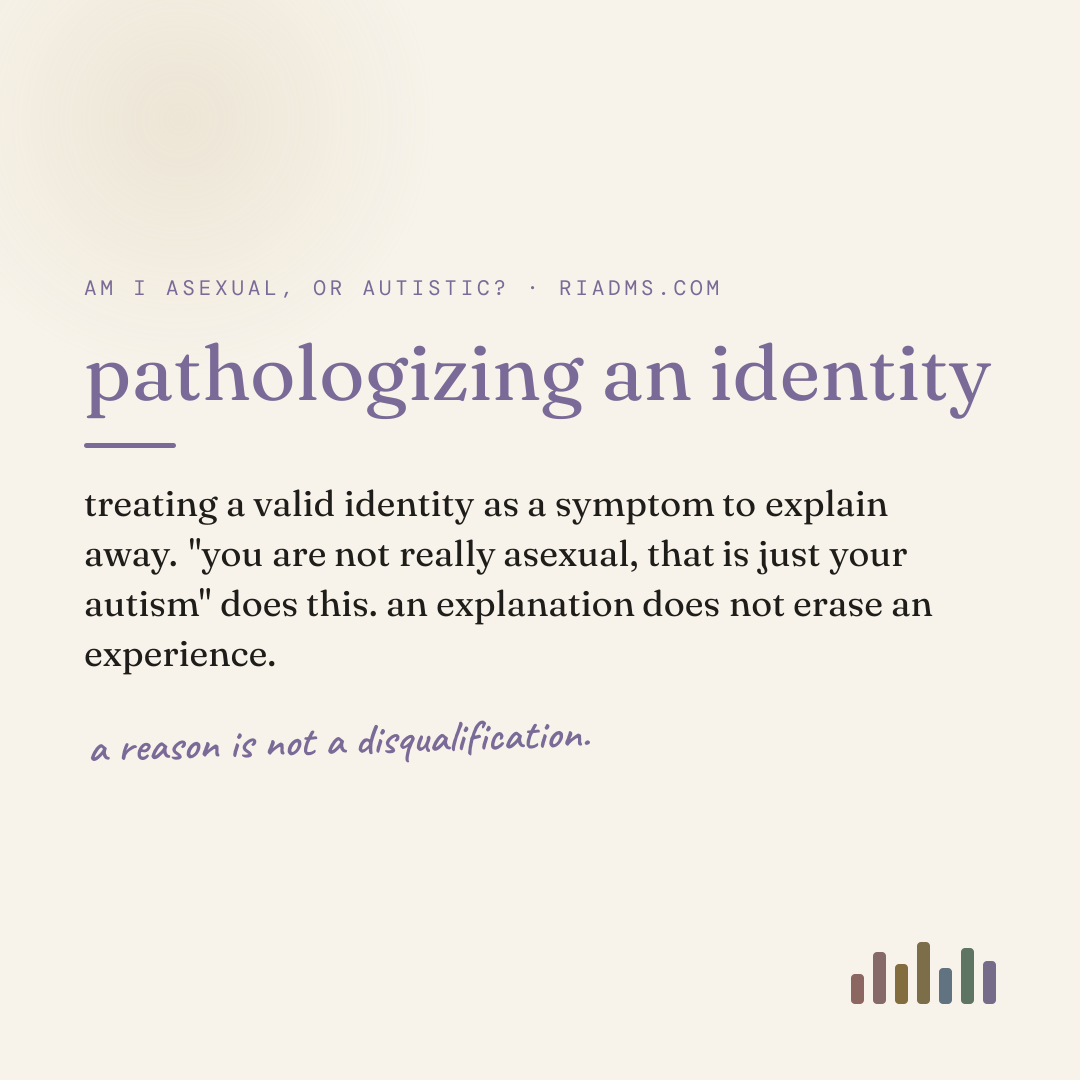
That’s the trap, and I want you out of it. A reason is not a disqualification. An explanation does not erase an experience. Nobody tells a tall person their height isn’t real because there’s a genetic explanation for it. Your asexuality doesn’t have to be mysterious and uncaused to be valid. It just has to be true for you. You don’t owe anyone a version of yourself that’s impossible to explain, just to be allowed to use a word that fits.
And this is exactly why untangling it, instead of avoiding it, is the kinder thing. The fear only has power while the question stays in the dark. Once you look at it directly and go, okay, maybe both, maybe it’s complicated, and that’s fine, it loses its teeth. You stop needing your identity to be pure. You just get to have it.
so what do you actually do with this
If you’re sitting with this, here’s the gentlest path through.
You don’t have to pick. This was never a multiple-choice test with one correct bubble. Both can be true. Either can be true. You can hold it loosely while you figure it out, and you can change your mind, and none of that makes you a fraud.
Explore both, with curiosity instead of fear. Read autistic voices. Read asexual voices. Notice which descriptions make your chest go, oh, that’s me. You usually find your people not through a diagnosis but through that jolt of recognition, and you’re allowed to belong to more than one room. And let the labels serve you, not the other way around. If calling yourself asexual makes your life clearer and lighter, it’s doing its job, and no external explanation gets to take it from you.
keep pulling the thread
Angela Chen’s Ace handles this overlap with more care than almost any clinical source, and it’s the book I’d hand anyone sitting in this exact question. If you want the vocabulary underneath it all, start with attraction vs desire and which orientation combination are you.
Am I asexual or autistic. Maybe one. Maybe both. Maybe you’re still finding out, and that’s not a problem to rush. But hear the answer underneath the question: you are not a puzzle someone needs to solve, and you are not a glitch that needs explaining away. Two true things can live in the same person, and a reason for a feeling has never once made the feeling less real. You get to be exactly as complicated as you are. And you get the words either way.

