I have never been attracted to a stranger. Not for a second, in my whole life. I didn’t think about it much until I noticed that everyone around me was using that feeling to pick who they date, and I was going to have to do it some other way.
So I went and read about how the mechanism works, expecting to find out what I was missing. That is not what’s in the research. There are three large studies here, all recent, and put together they say something quite hard. The thing you screen for hardest is the weakest predictor available. The thing you think is the real signal cannot be predicted at all. And the two things that actually carry a relationship are things you can’t see on a first date.
your type is a description of your taste in profiles
In 2014, Paul Eastwick and colleagues published a meta-analysis in Psychological Bulletin on how well ideal partner preferences predict anything. Your list, in other words. Funny, kind, tall, reads, ambitious, whatever yours is.
The finding splits cleanly in two, and both halves are real.
Your stated ideals predict, very well, how much you’ll like a partner described on paper. Show someone a profile that matches their list and they like it more. That works, and it replicates.
Your stated ideals predict close to nothing about who you actually end up drawn to once you have met them in person.
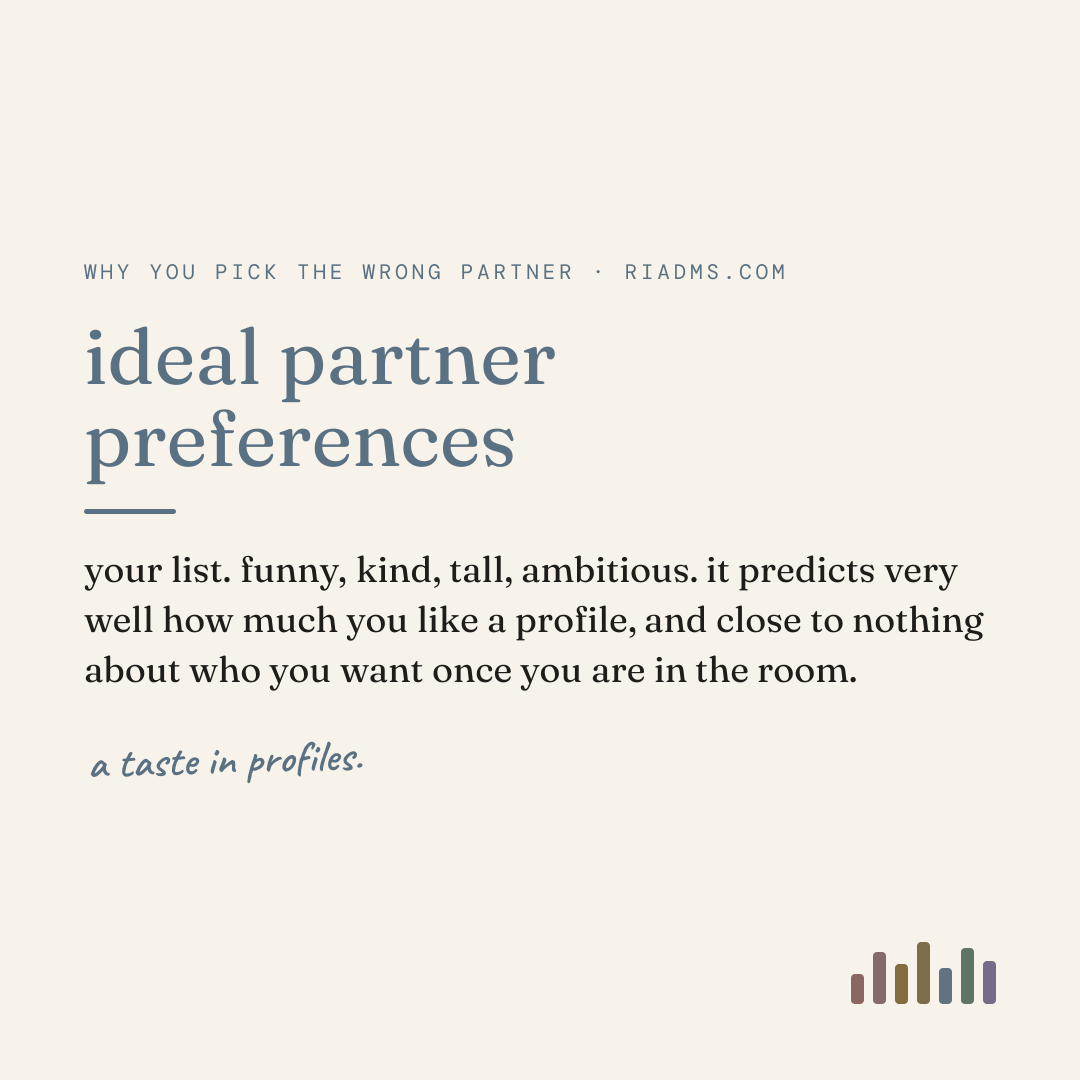
Same list. Same person holding the list. Predictive on paper, not predictive in the room.
So your type isn’t fake. It’s just a document about a different thing than you thought. It’s useful for picking books, or films, or which character you’re going to be annoying about for a month. My own type in fiction is people who have committed serious crimes. I know what that’s worth as a plan for my actual life.
And this matters more now than it did in 2014, because the whole apparatus of modern dating is a menu. Everybody is a profile until they aren’t. Which means the filter you run hardest is the one that only works in the format where it doesn’t count.
come think with me
one letter a week.
the word for one feeling you’ve had but couldn’t name, and why it works that way. the same thing you just read, in your inbox, once a week.
- one letter a week, about a ten minute read
- all nine printable workbooks, free
- the research, with its caveats kept in
- hit reply and it reaches me. i read every one
no pressure, no spam, no gatekeeping. unsubscribe anytime · riadumitrescu.substack.com
all of this is free and it stays free. if it gave you a word you didn’t have, you can buy me a coffee.
nobody can predict the spark, and they really tried
Second study, and this one is funny.
In 2017, Samantha Joel, Paul Eastwick and Eli Finkel published Is Romantic Desire Predictable? in Psychological Science. They took two samples of speed daters. They measured over a hundred traits and preferences on every single person, everything you would ever put on a list. Then those people went on a series of four-minute dates. Then the researchers threw machine learning at all of it.
Machine learning is good at this kind of problem. If a pattern is in there, it finds it. If it says there’s nothing, that’s information too. This was a fair fight.
And it worked for two of the three things.
It could predict how much a given person tends to like other people in general. Some people are just warmer daters.
It could predict how much people in general tend to like a given person. Some people are broadly popular and you can see it coming from the questionnaire.
Then the third thing. The actual thing. How much these two specific people uniquely wanted each other, over and above those general tendencies.
Essentially zero.
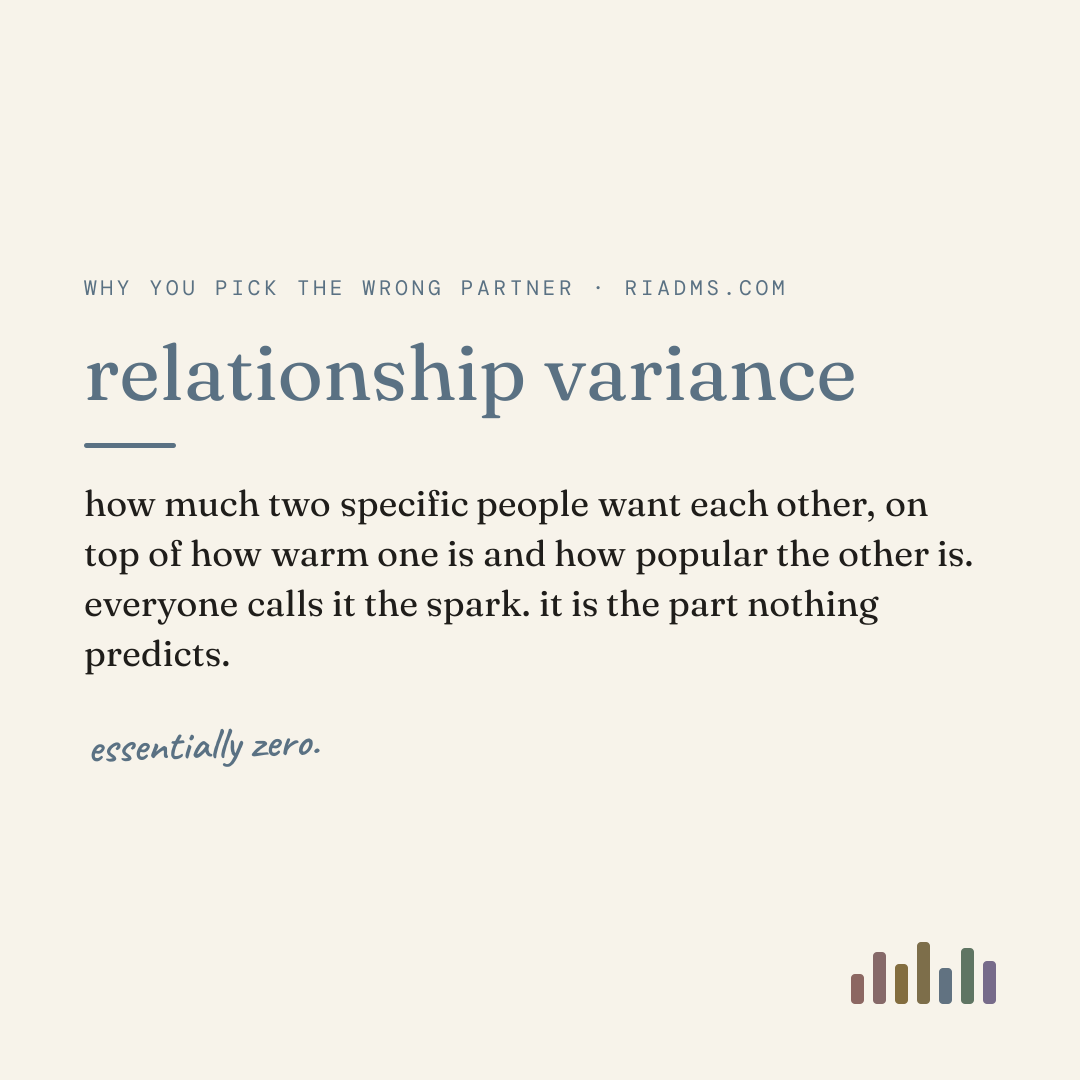
Eastwick’s line on it is the best piece of dating advice in any of this, and he wrote it in a psychology journal: romantic desire may be more like an earthquake, a dynamic and chaotic process, than a chemical reaction involving the right combination of traits.
I don’t think this is a compatibility problem. I think it’s a category problem. We’re trying to solve for a variable that doesn’t exist yet. It comes into being between two people, and we keep trying to find it before we’ve met anyone.
what actually predicts it, and why you can’t screen for it
In 2020, Joel led a team that pooled 43 longitudinal studies from 29 laboratories, covering 11,196 couples, and asked machine learning what predicts relationship quality. Two categories mattered, and not equally.
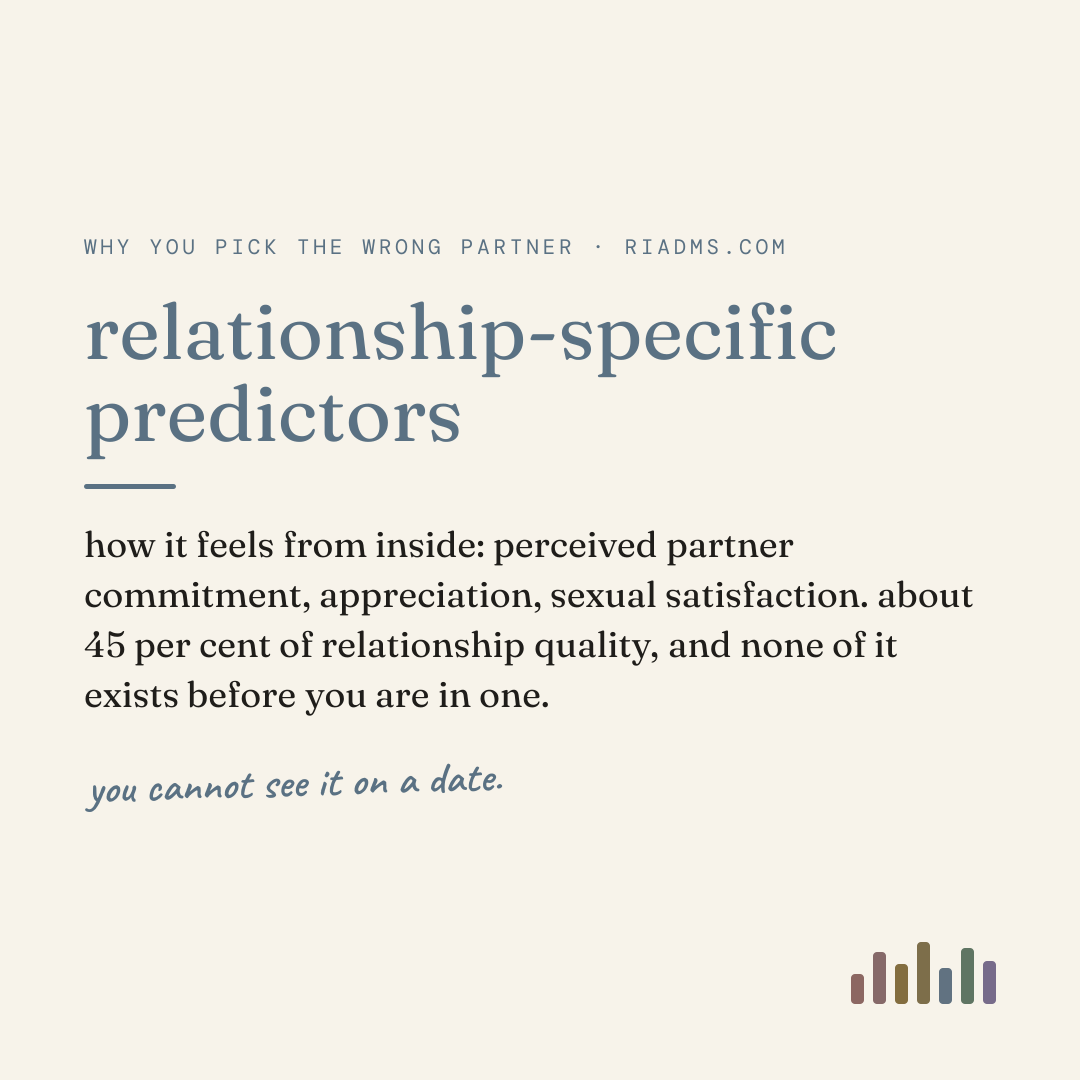
How the relationship feels from the inside explained about 45 per cent of the differences. The strongest ones were perceived partner commitment, appreciation, and sexual satisfaction.
What kind of person somebody is explained about 21 per cent. And here’s the part that reorganised how I think about this. Look at which individual traits carried that 21: life satisfaction, negative affect, depression, attachment avoidance, attachment anxiety.
Every single one is about the person answering the questionnaire. Not about their partner.
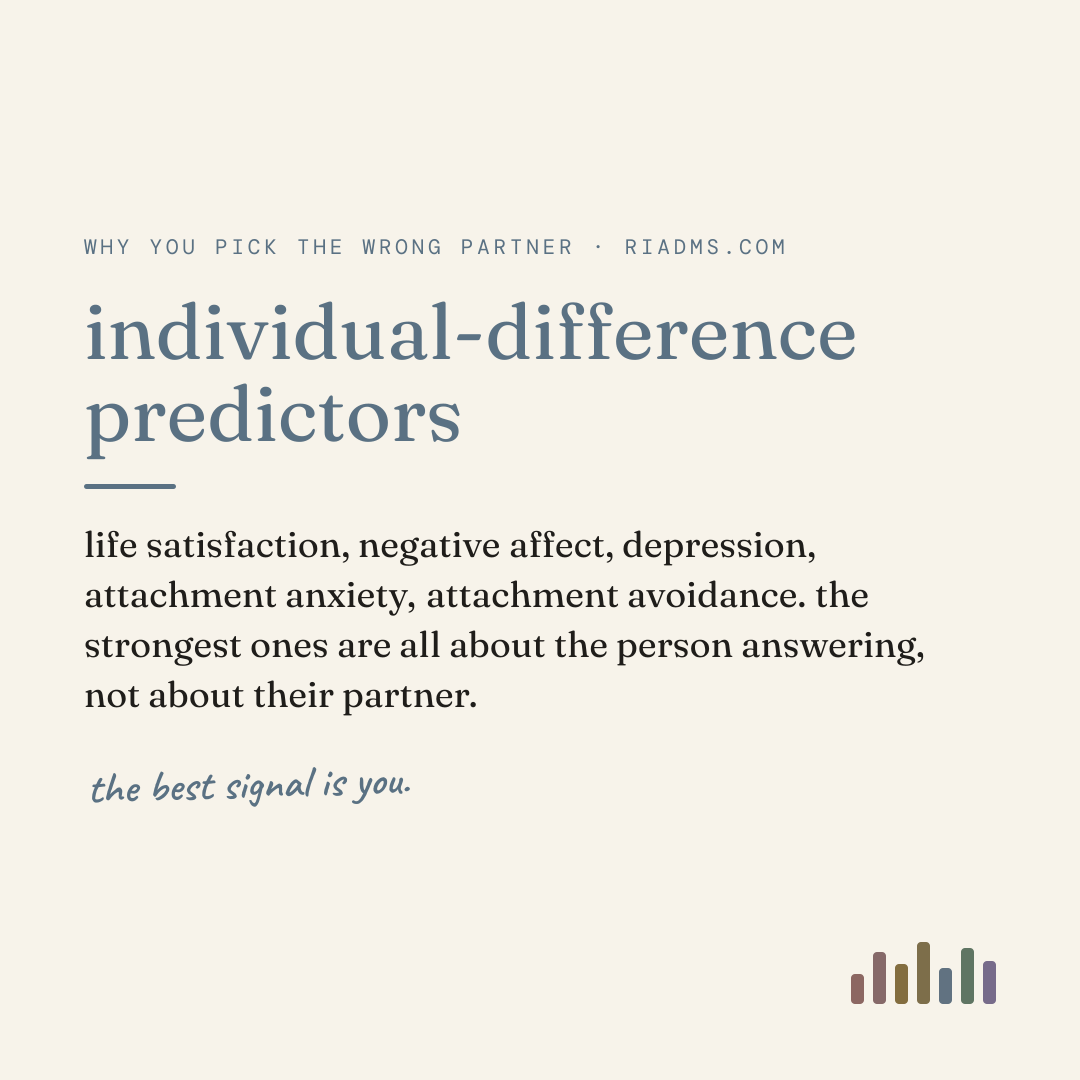
So what is the best available prediction of how your next relationship goes? Not a fact about your next partner. A fact about how you’re doing.
I’m going to leave in the finding that argues against me, because leaving it out would make this a worse page. Sexual satisfaction is on that top list. It’s a real predictor and I’m not going to pretend a study said something more convenient. What it isn’t is a screening tool, because like the other two it only exists once you’re already in the thing.
the equipment I didn’t get
I don’t experience sexual attraction, so a lot of this never arrived. The spark mostly isn’t available to me. Mine is intellectual, and it can land on a friend exactly as hard as on a partner, which took me an embarrassingly long time to work out.
I do have a filter. It’s opinions. It’s almost entirely about how somebody thinks and not at all about how they look, and it means I have to hear a person talk for a long time before anything happens at all. That’s slower. It is not better. I still build an imaginary version of people. I’m just doing it with different material.
What the missing piece did give me is that I could see the other machinery running, because nothing was drowning it out. When one variable is at zero the rest stop hiding behind it.
so what do you actually do
Demote your list from a filter to a set of non-negotiables. Not thirty adjectives. A short list of things a person has to have for you to be able to live alongside them. Then use it the way it works: to get people out, not to pick them in.
Stop assessing the person and start assessing the relationship. Not whether he’s impressive. Whether the thing the two of you make is any good, and what his presence does to your life. That’s the 45 per cent.
Screen yourself, honestly, first. If you’re at your worst right now, you will pick someone who fits your worst. Not because you’re broken. Because your brain would rather stay in a state it already knows how to be in. Do the work and the pool changes on its own, without you having improved at judging anyone.
And delay. You don’t have to know after one date. You probably can’t. That’s what the research says, not a personality trait you’re failing to have.
