You broke up. You know it was right. You have the list of reasons, you could recite the list. And it’s 11pm and your thumb is hovering over their name anyway, and your brain is quietly building you a beautiful little case for why texting them right now is reasonable, mature, even kind.
You are not weak. You are not going crazy. You are in withdrawal.
it’s withdrawal, not love
When you bond with someone, your brain builds a small chemical economy around them. Their voice, their texts, their body next to yours in bed, all of it running on oxytocin and dopamine, the same reward wiring every good thing runs on. You didn’t just fall in love with a person. You got a person wired into your reward system. Then it ends, and the supply is cut, all at once.
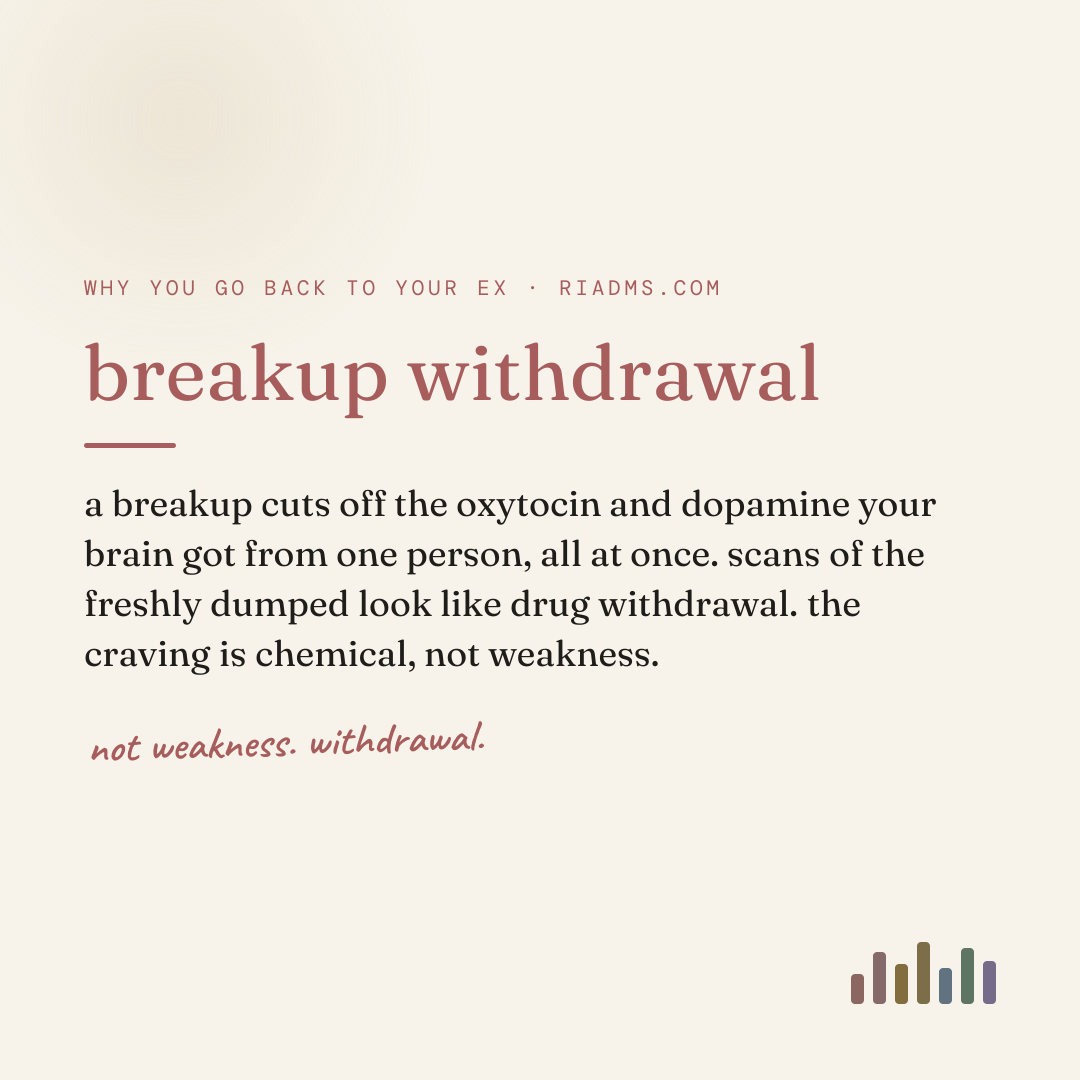
This isn’t a metaphor. When researchers scanned the brains of people who had just been rejected but were still in love, the regions that lit up were the same reward and craving regions you see in someone withdrawing from cocaine. Same machinery. Same ache. So when going back feels like a physical need and not a decision, that is because right now it kind of is. You are not missing them. You are in withdrawal from them. Those feel identical from the inside, and they are not the same thing.
come think with me
one letter a week.
the word for one feeling you’ve had but couldn’t name, and why it works that way. the same thing you just read, in your inbox, once a week.
- one letter a week, about a ten minute read
- all nine printable workbooks, free
- the research, with its caveats kept in
- hit reply and it reaches me. i read every one
no pressure, no spam, no gatekeeping. unsubscribe anytime · riadumitrescu.substack.com
all of this is free and it stays free. if it gave you a word you didn’t have, you can buy me a coffee.
the rosy edit
Then your brain does something genuinely cruel.
It starts playing the highlight reel. The slow morning, the inside joke, the one perfect afternoon, in full colour, on a loop. And it quietly leaves out every fight, every night you felt small, every reason that list of yours exists in the first place.
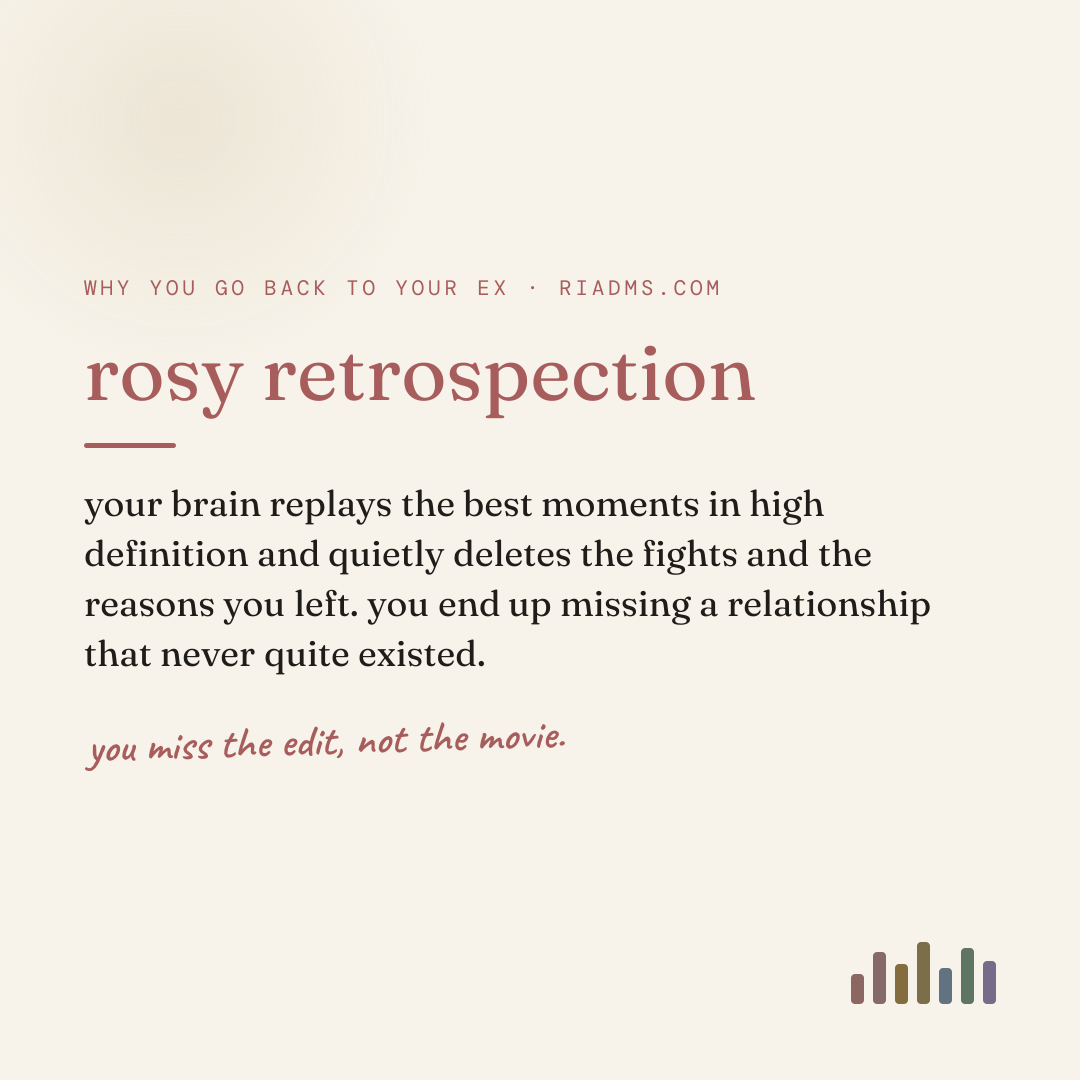
There is a name for this. It is called rosy retrospection, and it is measurable: people reliably remember experiences as better than they rated them while they were actually living them. Which means the relationship you are aching for is not the relationship you had. It is an edit. Your brain cut a trailer, and a trailer is built to sell you a ticket to a film you already sat through and did not love.
The moments were real. But a real moment lifted out of its real context becomes a kind of lie, and the ache is using your best memories against you.
the slot machine
If your relationship was steady, this part might not be yours, and you can skip ahead. But if it ran hot and cold, wonderful one week and gone the next, read it twice.
Unpredictable reward is the most persistent pattern we know of. Not the most pleasant. The most persistent. It is the difference between a slot machine and a vending machine. A vending machine that fails once is broken, and you walk away. A machine that pays out at random is a thing people give their whole lives to. An ex who was sometimes amazing and sometimes awful trained you on exactly that schedule, and the good times felt enormous precisely because they were never guaranteed.
the years you already put in
There is a quieter voice too, and it does not talk about love at all. It says: you have already put three years into this. Five. Ten. You cannot just walk away from that.
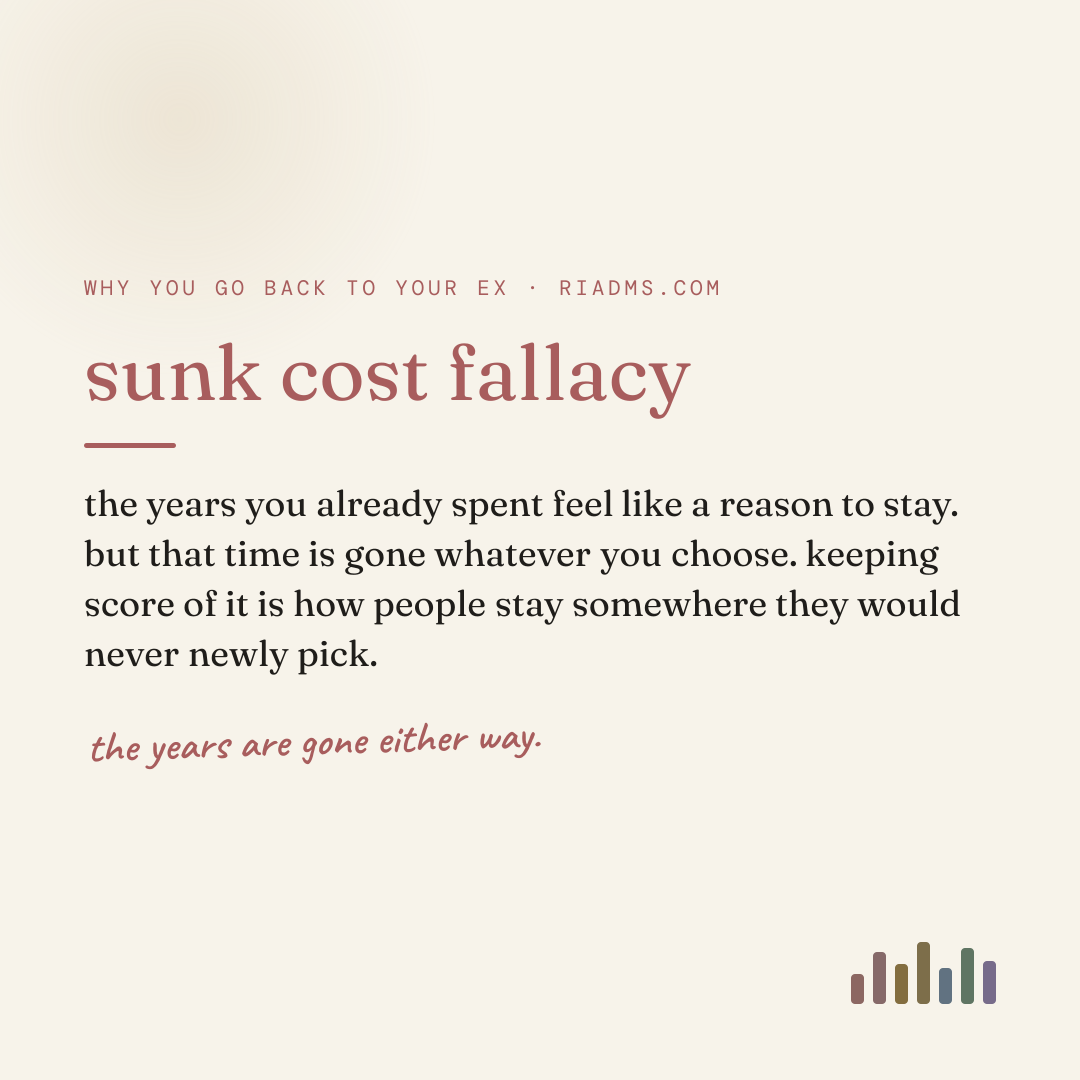
This is the sunk cost fallacy, the same reason people sit through films they hate and hold a stock that is tanking. The time is gone. It is gone whether you stay or leave. It cannot be earned back by staying, it can only be joined by more of the same. Counting it as a reason to return is counting money you have already spent as money you still have. You don’t. The only honest question is the one that ignores the past completely: knowing everything you know now, would you choose this again, starting today?
why the familiar feels safe
And underneath all of it, the oldest pull. The ex is known. Being alone is not.
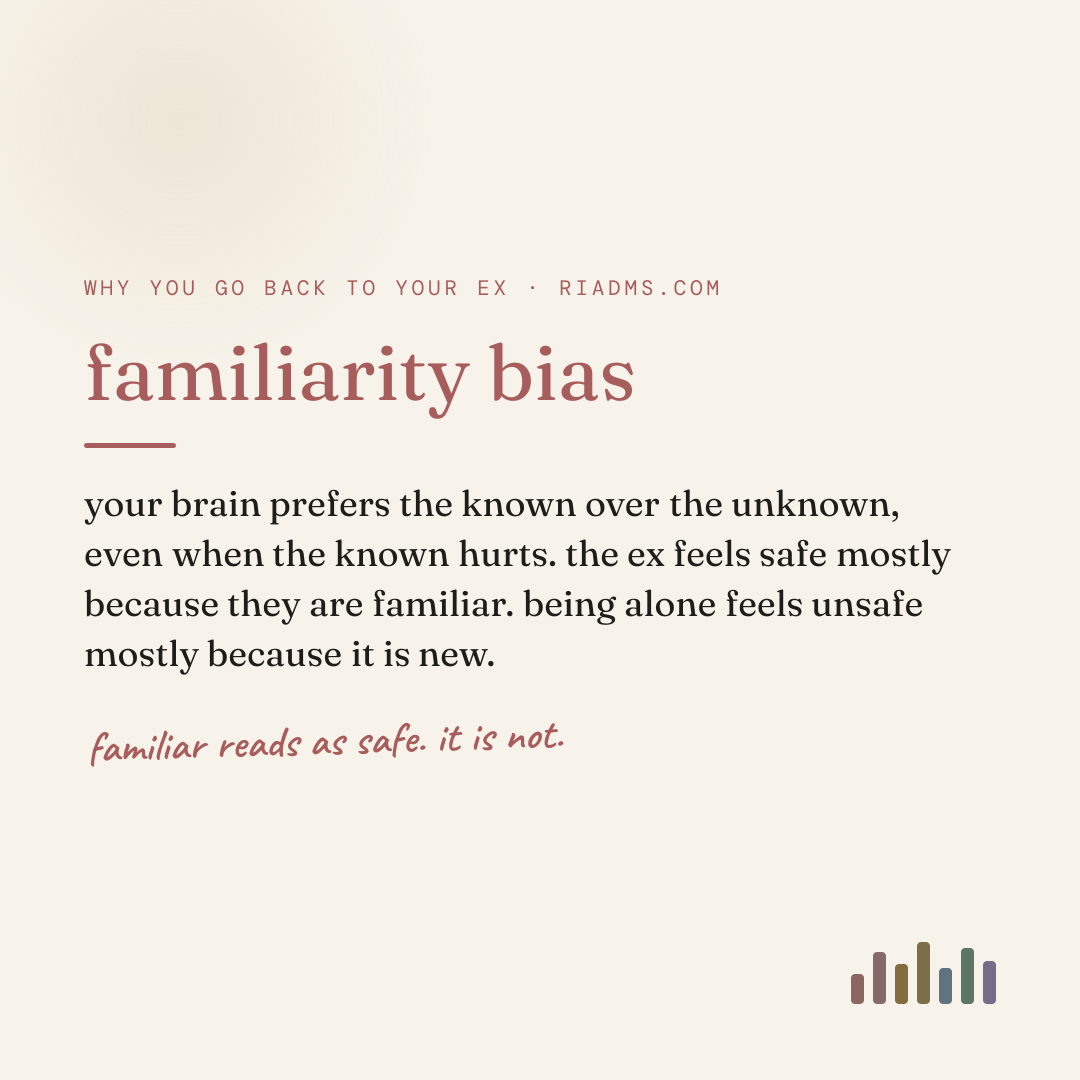
Your brain runs on a very old bias: the more familiar a thing is, the safer it feels, whether or not it is actually good for you. It is the same reason a song you did not like grows on you by the tenth play. A known ex, even one who hurt you, registers as safe. The unknown, the quiet apartment, the starting over, the making new friends at an age when that feels impossible, registers as danger. So going back can feel like relief when really it is just a return to the familiar. You are not choosing them. You are choosing the devil you know over a fear you have not sat with yet.
But that fear shrinks every single day you do not feed it. Going back does not end it. It postpones it, and charges interest.
so what do you actually do
You have probably heard of no contact. It mostly works, but not for the mystical reasons the internet gives it.
If a bond is a reward circuit that keeps getting topped up, then every check-in, every “just seeing how you are,” every three-hour meetup that ends in the same old fight, is another hit. It does not ease the withdrawal, it resets the clock. So the case for distance is not punishment, and it is not a secret strategy to win them back. It is simply that your brain cannot recalibrate to their absence while you keep reintroducing them.
So tonight, when the thumb is hovering, you do not have to decide they were evil. You just have to notice that the thing you are feeling is a craving, and a craving is not an instruction. Put the phone down. Call a friend who will not fix the feeling but will make you less alone inside it. Your brain needs a different source of oxytocin tonight, and almost anything that is not them will do.
If you want the longer version, Attached is the book on why the anxious and avoidant loop keeps dragging you back to the person least able to soothe it, and How to Break Your Addiction to a Person is exactly what the title says. And the Fisher study is the one that proved the withdrawal is real, in case you are the kind of person who needs the receipts before you will be kind to yourself.
The craving passes. It always passes. And the first person you actually need to break up with was never your ex. It is the pattern. You can start tonight, by not texting.