You walked into the room fine. Genuinely fine. And then someone else in that room was anxious, or angry, or quietly falling apart, and within minutes, so were you. You didn’t decide to feel it. It just moved into you like it had a key to your house.
And afterward you can’t even tell whose feeling it was. You went to dinner in a good mood and came home with a knot in your chest, convinced something was wrong with your life, when actually you just sat next to someone whose life was on fire.
This has a name. It’s a real, studied mechanism, not a personality flaw and not you being dramatic. And once you understand how it works, you can finally tell the difference between a feeling that’s yours and one you caught. Which is the whole game.
it’s automatic, and it’s physical
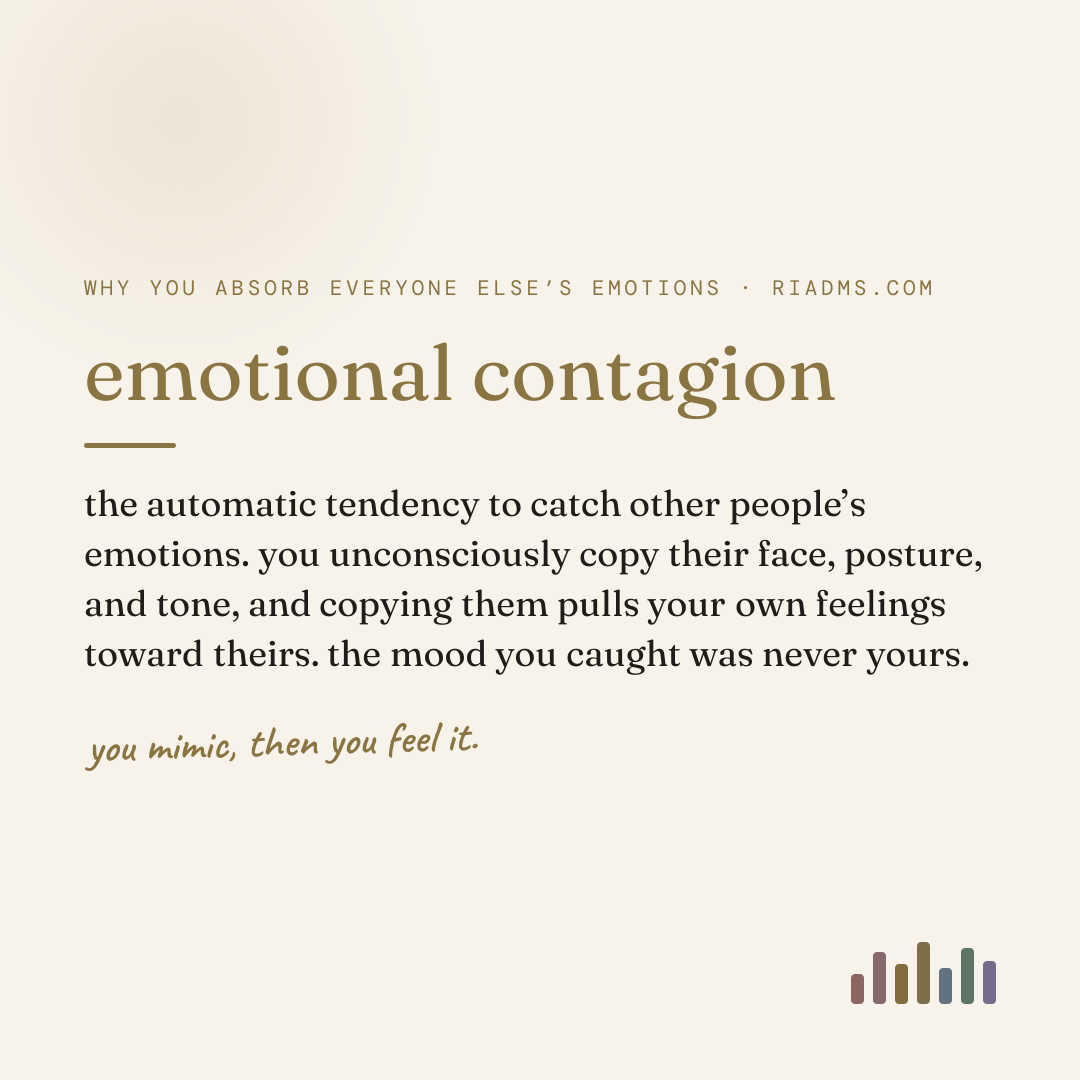
The research is called emotional contagion, and the definition, from Elaine Hatfield and John Cacioppo, is basically this: we automatically mimic the people around us, their expressions, posture, tone, movement, and by copying them we start to converge with them emotionally. The key word is automatic. Someone frowns and your own face does a micro-version of the frown before you’ve clocked it. Someone’s voice goes tight and fast and yours starts to. You are, constantly, doing a faint impression of the people near you. And because your brain reads your own face and body to figure out how you feel, some of that borrowed tension gets reported back to you as your mood.
You’ve probably heard people explain this with mirror neurons, and I want to be careful there. Mirror neurons are real, but they were found in monkeys, and the popular story that humans have special “empathy neurons” that make you feel other people’s pain is genuinely oversold and argued about among scientists. So I won’t hang this on them. The mimicry is enough. That low mood you caught at dinner isn’t you being moody. It’s you being an excellent, unconscious mimic.
come think with me
one letter a week.
the word for one feeling you’ve had but couldn’t name, and why it works that way. the same thing you just read, in your inbox, once a week.
- one letter a week, about a ten minute read
- all nine printable workbooks, free
- the research, with its caveats kept in
- hit reply and it reaches me. i read every one
no pressure, no spam, no gatekeeping. unsubscribe anytime · riadumitrescu.substack.com
all of this is free and it stays free. if it gave you a word you didn’t have, you can buy me a coffee.
it crosses a screen, and it’s real stress
Here’s the part that should make you take this seriously. It isn’t only an in-person thing. You can catch a feeling with no face in front of you at all.
In 2014 there was a huge, controversial study run on Facebook. Researchers quietly adjusted what almost 700,000 people saw in their feeds, and people who saw less positivity started posting slightly more negative things themselves. Emotion spread through text alone. No faces, no voices, just words on a screen. The effect per person was tiny and a lot of people were rightly furious about the ethics, but it made the point: contagion doesn’t need a body in the room. Your group chat is a channel too.
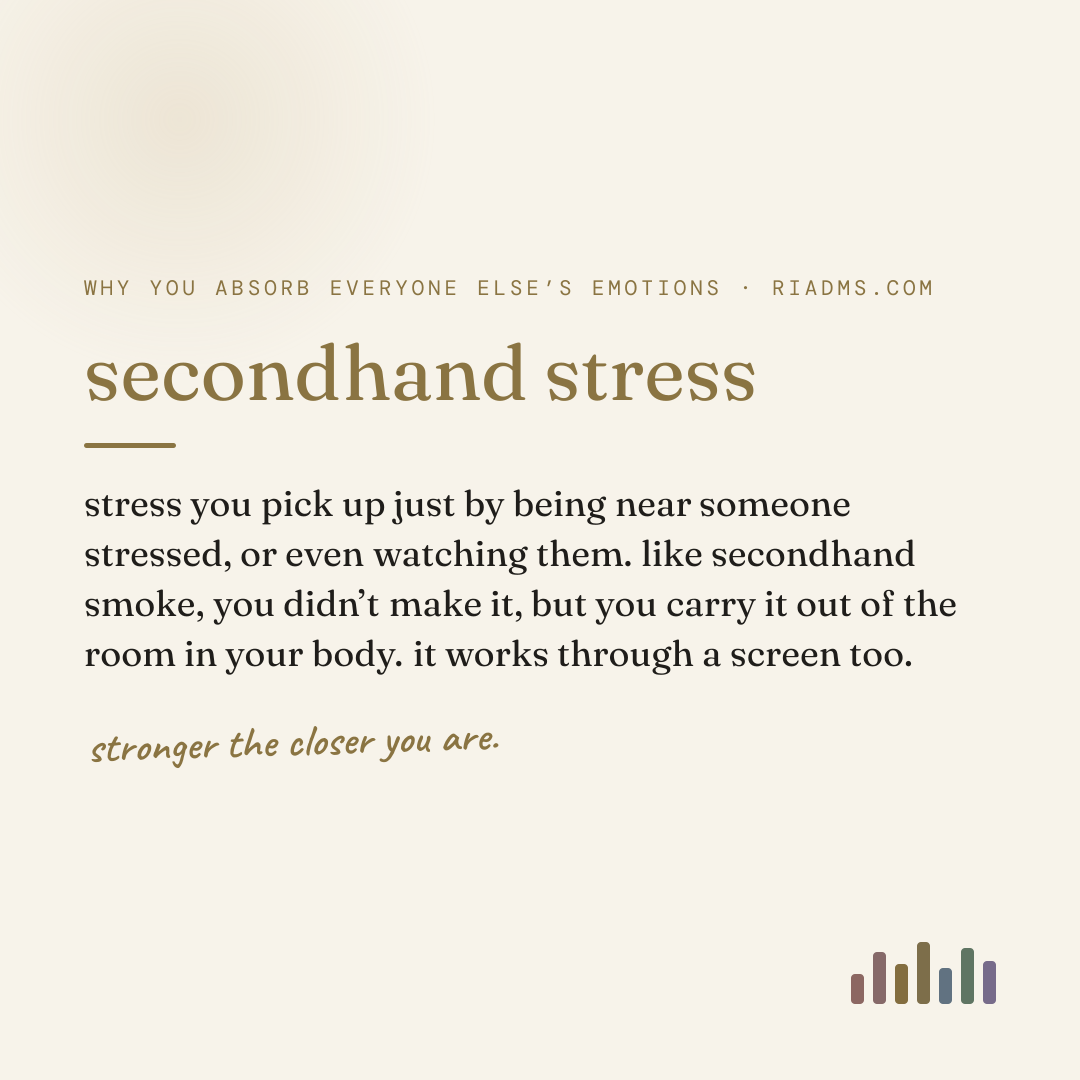
And it’s not just vibes, it’s physiology. In research by Veronika Engert and Tania Singer, people simply watched someone go through something stressful, and a chunk of the observers had their own stress hormone, cortisol, go up. Just from watching. It happened more when the stressed person was someone they were close to, and it still happened through a video screen. Think of it like secondhand smoke. You didn’t light anything, you were just in the room breathing, and you still walk out carrying it in your body. The only difference is that with smoke, everyone agrees you’re allowed to open a window.
why some of us are sponges
So why does this flatten you when your friend walks through the same room untouched?
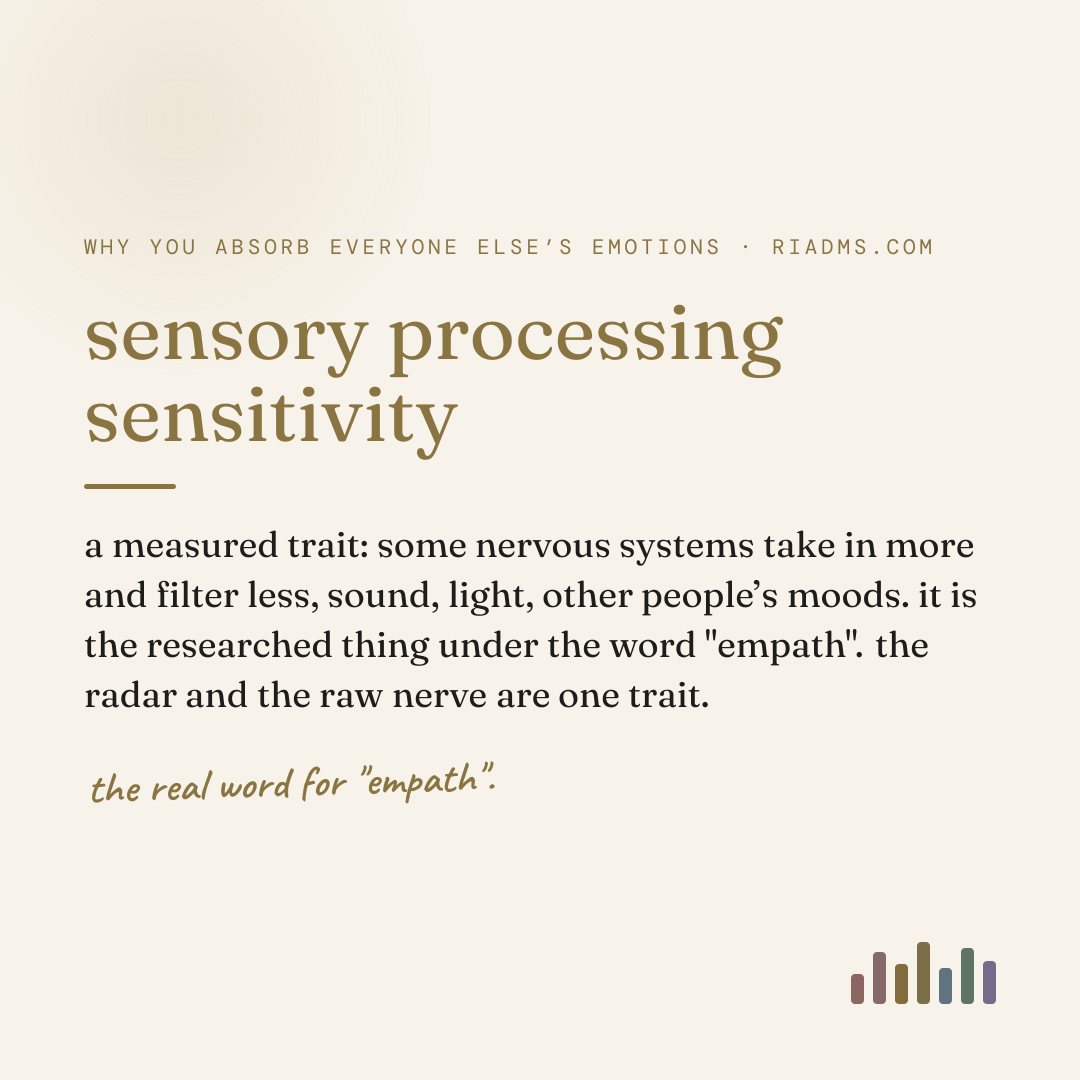
People love the word empath, and I’ll use it because it’s the word we reach for, but I want to be straight: empath is not a scientific or medical term. There’s no test for it. The researched version is sensory processing sensitivity, from the work of Elaine and Arthur Aron. They built an actual scale and found some people are measurably more affected by everything, sound, light, other people’s moods. Their nervous systems take in more and filter less.
If that’s you, you’re not weak and you’re not broken. You have a system that’s turned up. The same sensitivity that makes a tense room genuinely painful is the thing that makes you the person who notices someone’s off before they say a word, the friend who feels like home. It’s one trait and it cuts both ways. You don’t get the radar without the raw nerve. The problem was never the sensitivity. It’s that nobody taught the sensitive kid the difference between feeling with someone and turning into them. That’s the part we can actually change.
how to stop being a sponge, without going numb
The goal matters, so let me be clear about it. You don’t want to stop feeling people. Going cold to protect yourself costs you the best part of you. The goal is to feel with people without dissolving into them.
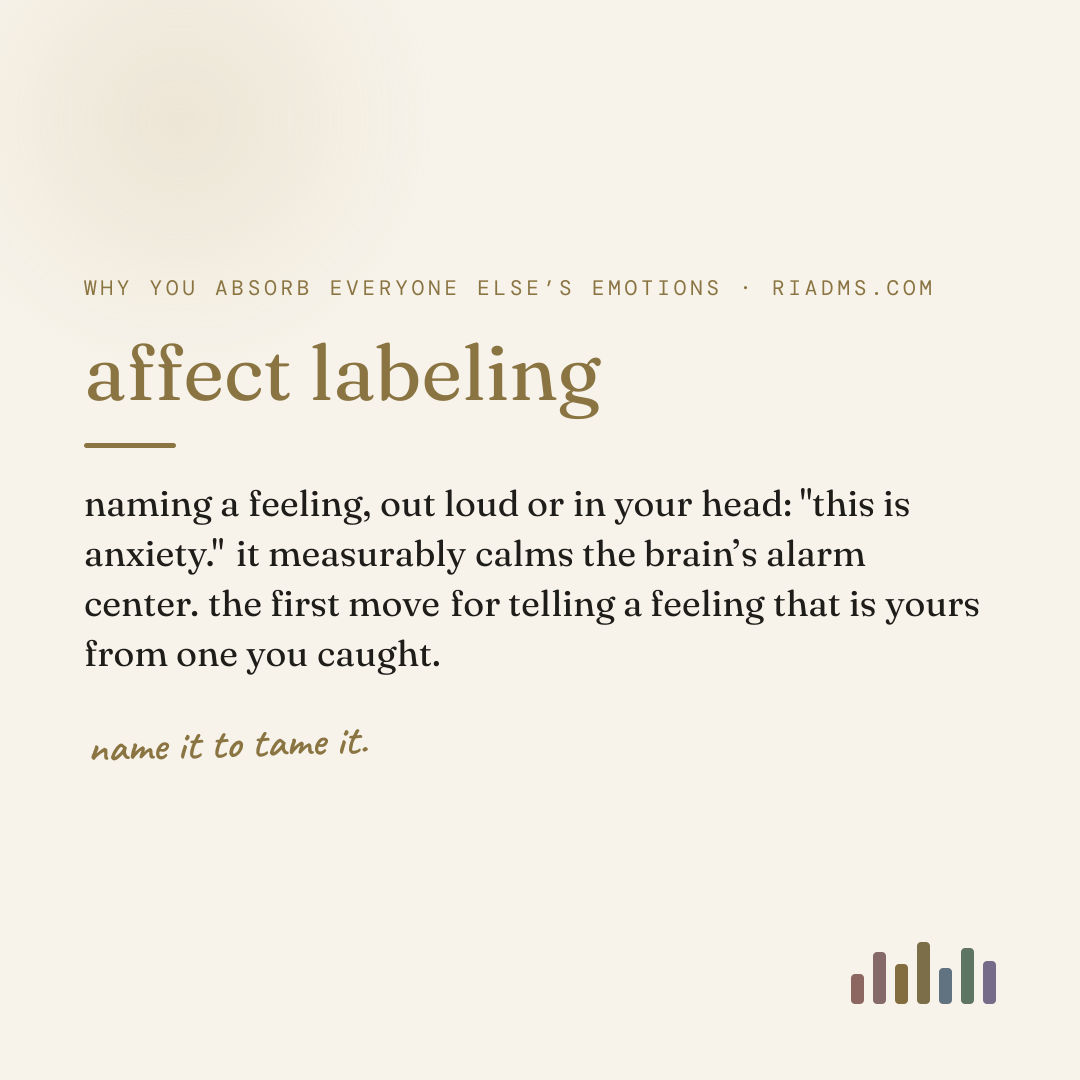
First, name it. In a study by Matthew Lieberman, just putting a feeling into words, “this is anxiety,” measurably calmed the brain’s alarm center. People call it “name it to tame it.” So the second you feel the shift, ask one question: is this mine, or did I catch it? Just asking creates a gap, and in that gap you often realize, oh, I was fine until I walked in here. This isn’t mine. I’m holding it for someone. It also helps to reappraise before the feeling peaks rather than bottling it up after.
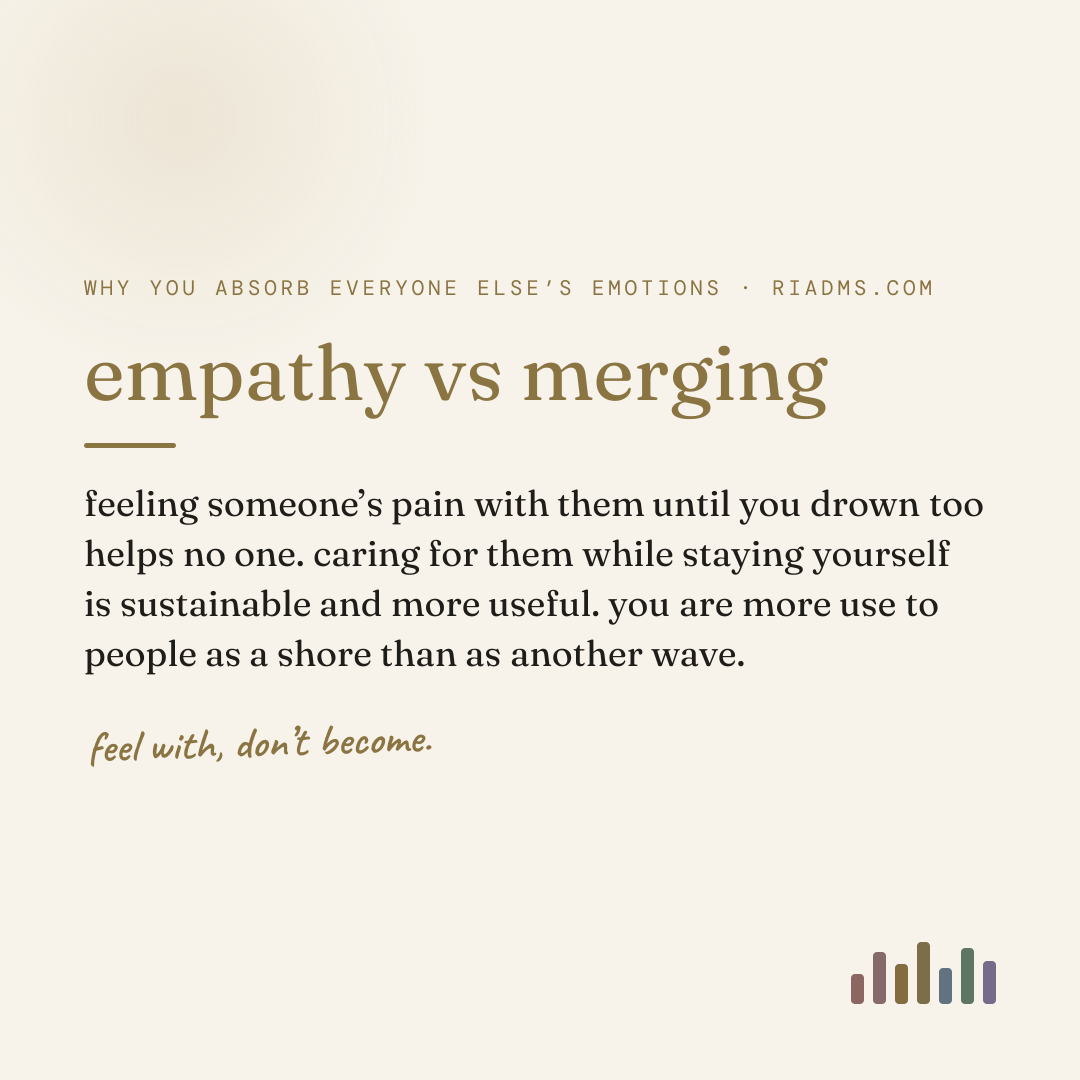
Second, learn the difference between empathy and merging. Research by Tania Singer shows that feeling someone’s pain all the way with them burns you out and helps no one, while caring for them, staying warm but staying yourself, is sustainable and actually more useful to them. That flips the guilt. You are more use to the people you love as a shore than as another wave. Then, practically: put something between you and the feeling before it sets in. Step out for a minute, get air, feel your feet on the floor, break the mimicry loop long enough to come back as yourself instead of an echo. And be careful whose room you sit in, including online. The tense friend, the doom-posting feed, the group chat that runs on outrage, those aren’t neutral if you’re the type who catches everything. Curating what you’re exposed to isn’t avoidance. It’s the same as not sitting in a smoky room for six hours when you already know your lungs are sensitive.
keep reading
If you recognized yourself as the sponge, Elaine Aron’s The Highly Sensitive Person is the trade book, and Ethan Kross’s Chatter is the best practical guide to the labeling and distancing tools. The two chapters closest to this one are why you feel sad for no reason, since sometimes the out-of-nowhere mood is one you caught, and the social hangover.
So the next time you walk in fine and leave heavy, run the question. Is this mine, or did I catch it. Because half the feelings you’ve spent your life carrying as evidence that something’s wrong with you were never yours. You just have a nervous system that takes people in, and nobody ever told you that you’re allowed to set them back down. You can feel people deeply and still keep your own center. Feel with them. Stay yourself. That’s not you caring less. That’s you finally learning to carry it like it belongs to someone else, because it does.